
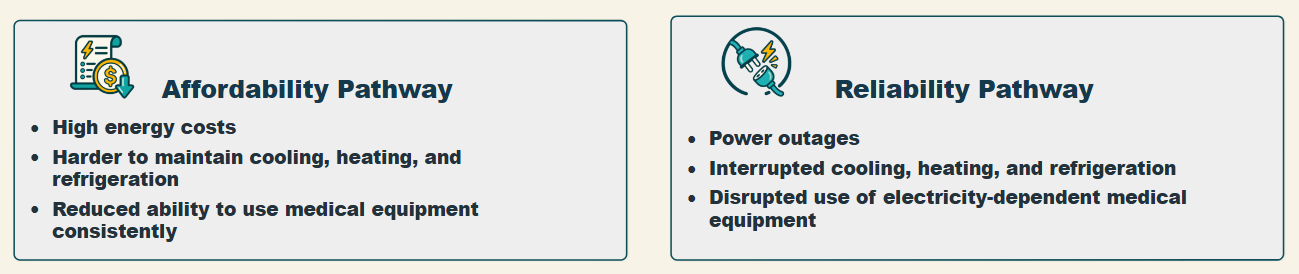
Two pathways to medical energy risk

Galvanista helps organizations connect healthcare and energy to identify where electricity reliability and affordability create health risk, develop viable interventions, coordinate funding and implementation, and evaluate results.

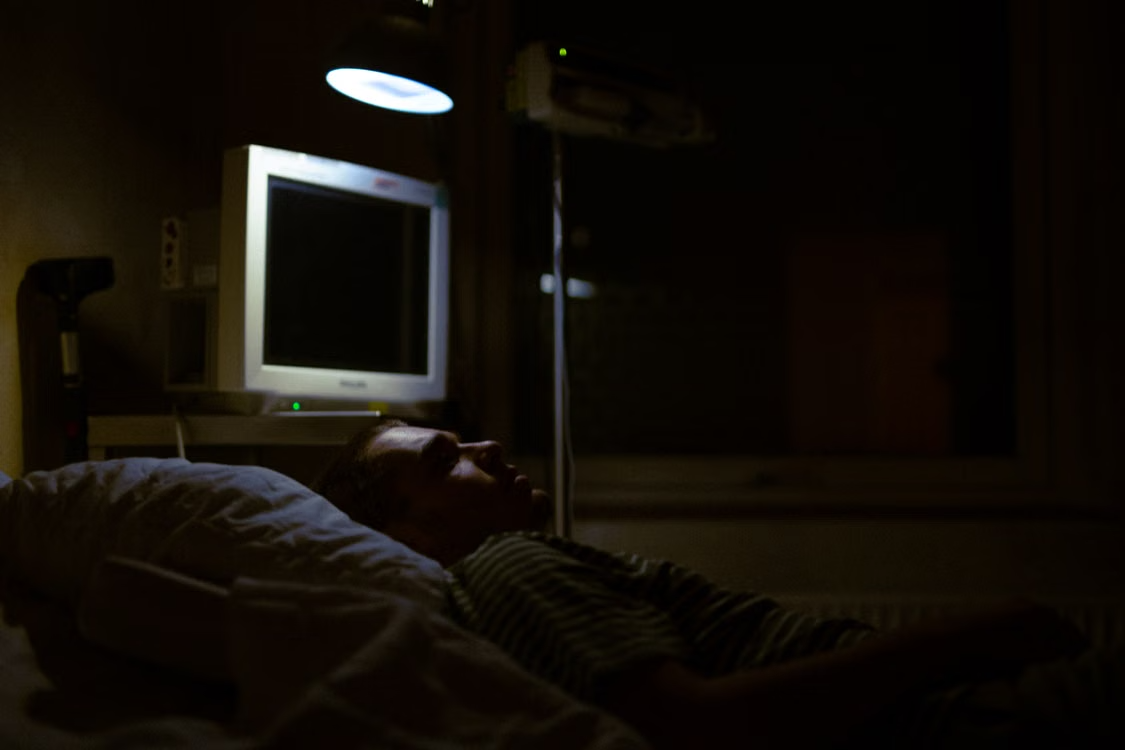
Electricity powers medical equipment, medication refrigeration, climate control, healthcare facilities, and other essential supports. When electricity becomes unaffordable or unreliable, those supports can be disrupted. That makes energy affordability and reliability relevant to health, healthcare delivery, and community resilience.


EcoDex is Galvanista’s analytical and decision-support framework. It brings health, energy, infrastructure, geographic, economic, and program information into the same decision process. That framework supports four core capabilities.
Connect healthcare and energy organizations, resources, expertise, and existing programs to develop operating pathways and support implementation.
Identify where energy conditions overlap with medically vulnerable populations and priority locations.
Identify potential funding, financing, incentives, and economic value that could support an intervention.
Evaluate new or existing programs across implementation, service continuity, healthcare utilization and spending, energy outcomes, and economic performance.

New Orleans is a current application of EcoDex, bringing local medical energy risk analysis together with an existing implementation opportunity.

Reserved for low- and moderate-income households.
Approved funding for battery backup systems under current implementation parameters.
Approximate program reach under the current implementation framework.
Eligible Entergy New Orleans customers can participate through qualifying systems.
Could help connect medically vulnerable households with available resilience resources.
5 New Orleans City Council, Substitute Resolution R-26-421, adopted October 1, 2026, Docket UD-24-02, and related Council implementation materials.
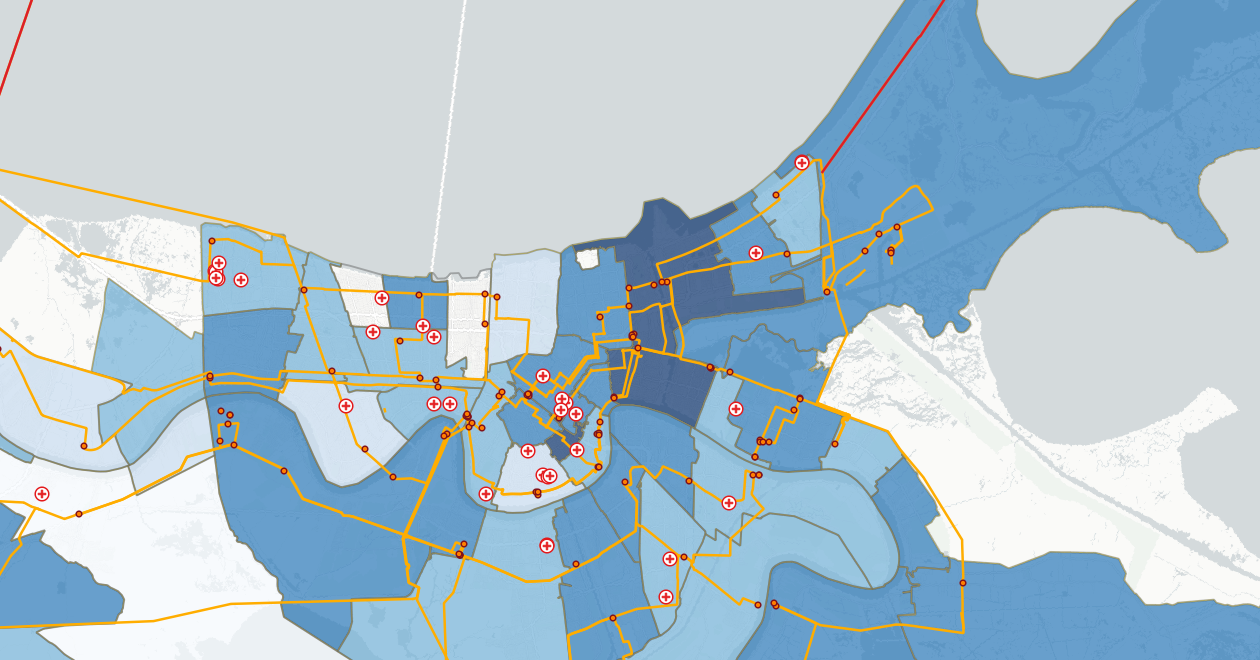
Blue shading represents HHS emPOWER Medicare beneficiary counts, helping establish where larger numbers of electricity-dependent Medicare beneficiaries are located.
Hospitals, federally qualified health centers, other relevant facilities, populations, and service areas help establish where healthcare and medically vulnerable needs are concentrated.
Transmission lines, substations, reliability conditions, service areas, and other relevant energy-system information help establish the infrastructure and electricity conditions affecting those areas.
July 2026 HHS emPOWER beneficiaries with qualifying electricity-dependent medical equipment or device claims.
In 14 high-energy-burden census tracts at or above DOE's 6% reference.
Per customer / year, all events. Without Major Event Days: 1.40 interruptions · 153.6 minutes.
Scenario-based sensitivity range from one modeled widespread-outage scenario under alternative utilization assumptions.
Produced using EcoDex, Galvanista's analytical and decision-support framework.
1 U.S. Department of Energy Low-Income Energy Affordability Data (LEAD) Tool. The 7,314 figure represents estimated households within 14 New Orleans census tracts meeting or exceeding the 6% high-energy-burden reference, not an individual household classification.
2 U.S. Energy Information Administration Form EIA-861 reliability data, 2020-2024. Values are medians of annual SAIFI and SAIDI under All Events and Without Major Event Days reporting conditions.
3 HHS emPOWER public data, July 2026 project extract, for Medicare beneficiaries with qualifying electricity-dependent medical equipment or device claims. The figure should not be interpreted as the total medically electricity-dependent population of New Orleans.
4 EcoDex modeled healthcare spending scenario-based sensitivity analysis. Illustrative planning range, not observed outage-attributable healthcare spending and not a causal estimate.
Medical Energy Risk Profiles for defined geographies and healthcare service areas are available at no cost. They provide a preliminary, place-based view designed to help organizations understand where medical energy risk is concentrated and whether deeper analysis or action may be warranted.
Discuss targeting, project development, implementation coordination, capital strategy, evaluation, or a potential partnership.