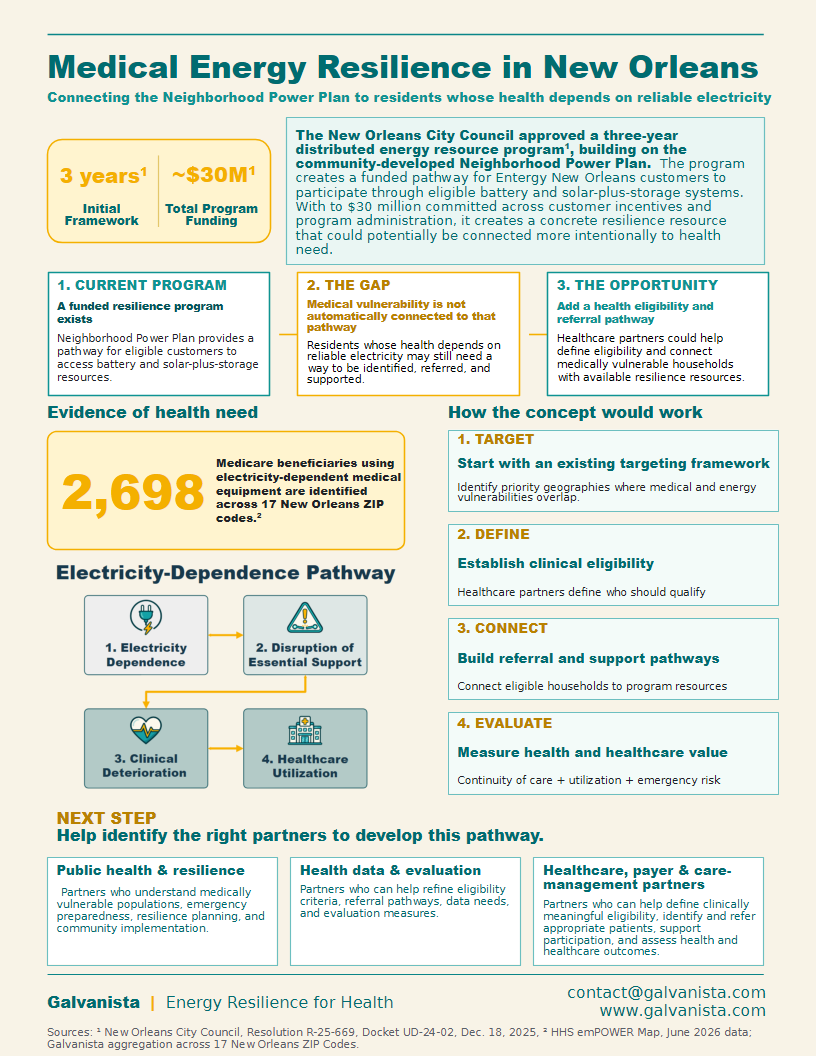
Two pathways to disrupted essential support
Galvanista helps organizations identify where energy conditions create health risk and develop, implement, and evaluate interventions that address it.

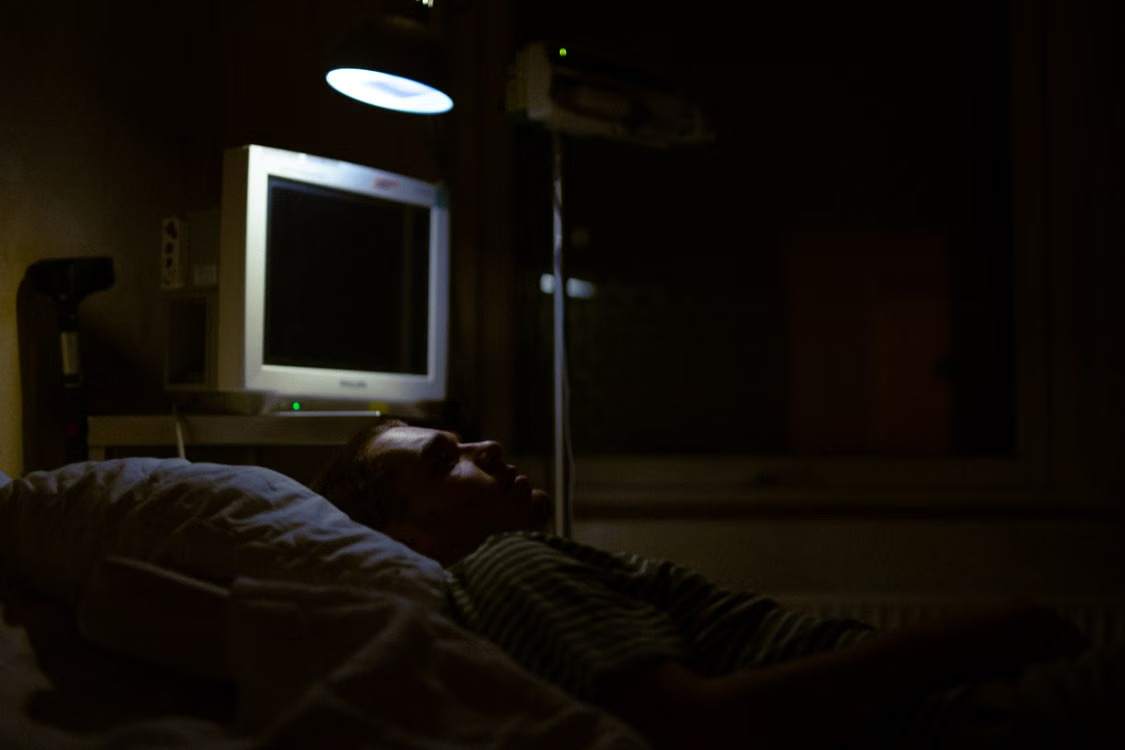
Electricity supports healthcare across rural and urban communities through powering healthcare facilities, medical equipment, medication refrigeration, climate control, and essential healthcare functions. When electricity becomes unaffordable or unreliable, those supports can be disrupted, making energy affordability and reliability important healthcare considerations that impact the greater community as a whole


EcoDex is Galvanista’s analytical and decision-support framework for identifying and implementing energy-related healthcare interventions through targeting, project development, and supporting evaluation. It helps Galvanista identify risk, prioritize needs, develop interventions and implementation pathways, support projects as they move into action, and evaluate outcomes.
Understand where energy conditions create health risk and where healthcare cost exposure may be concentrated.
Determine which populations, places, and energy-health needs should receive attention first.
Shape the intervention, funding pathway, delivery model, and partnerships needed to move forward.
Support and coordinate implementation with healthcare, program, community, energy, and delivery partners.
Assess what changed, for whom, and the healthcare and economic implications of the intervention.

New Orleans brings together several conditions EcoDex is designed to examine: residents whose health depends on electricity, areas with high household energy burden, reliability challenges, healthcare infrastructure, and potential healthcare cost exposure. Galvanista is applying EcoDex here to understand where these conditions intersect and where intervention may be most useful.

The program already has a defined framework, funding, and customer participation pathway. The opportunity is to connect those resources more intentionally to health need.
Initial framework for the distributed energy resource program.
Committed across customer incentives and program administration.
Eligible Entergy New Orleans customers can participate through qualifying systems.
A health eligibility and referral pathway could help connect medically vulnerable households with available resilience resources.
EcoDex can support the Neighborhood Power Plan by bringing health vulnerability, energy conditions, healthcare geography, and modeled healthcare cost exposure into a single decision-support view.
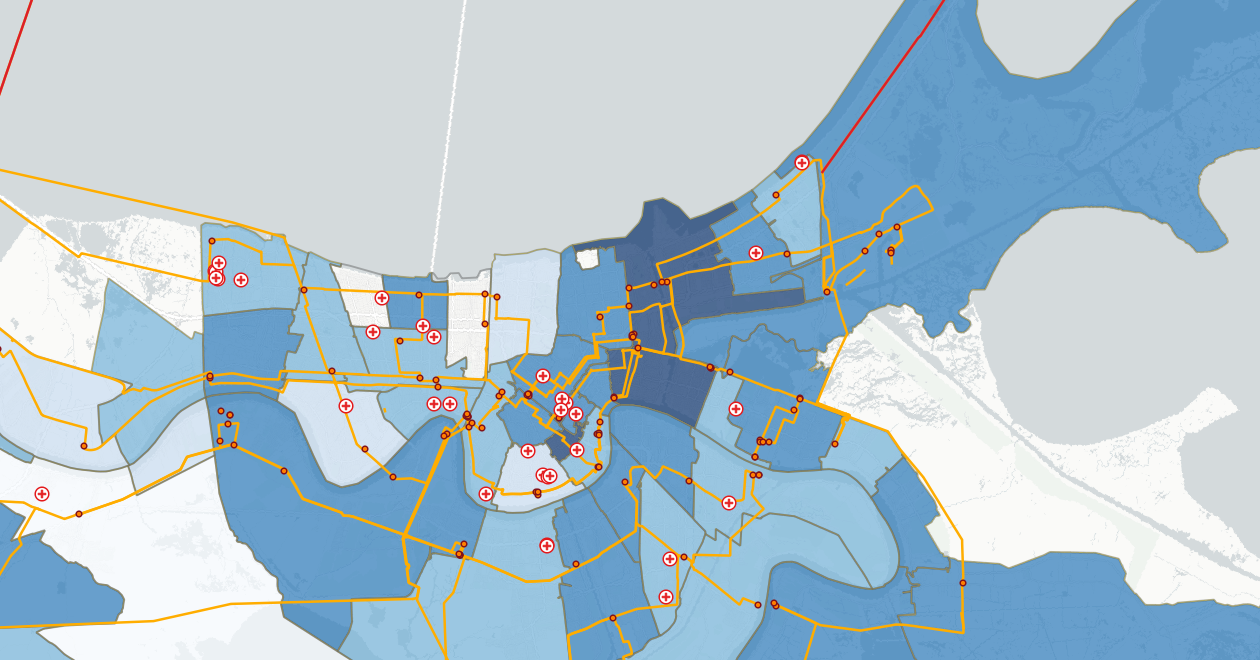
Blue shading represents HHS emPOWER Medicare beneficiary counts, helping establish where larger numbers of electricity-dependent Medicare beneficiaries are located.
Hospitals, federally qualified health centers, other relevant facilities, populations, and service areas help establish where healthcare and medically vulnerable needs are concentrated.
Transmission lines, substations, reliability conditions, service areas, and other relevant energy-system information help establish the infrastructure and electricity conditions affecting those areas.
Current HHS emPOWER beneficiaries with qualifying electricity-dependent medical equipment or device claims.
Tracts at or above DOE's 6% high-energy-burden reference.
1 HHS emPOWER public data for Medicare beneficiaries with qualifying electricity-dependent medical equipment or device claims.
2 U.S. Department of Energy household energy-burden data. The 7,314 figure represents estimated households within 14 tracts meeting the 6% tract-level reference, not an individual household classification.
3 U.S. Energy Information Administration Form EIA-861 reliability data, 2020-2024. Values are medians of annual SAIFI and SAIDI under All Events and Without Major Event Days reporting conditions. Major Event Days are days identified under reliability reporting rules as unusually severe outage conditions. The same metrics are shown under both conditions to distinguish overall outage exposure from conditions excluding Major Event Days. SAIFI values are rounded to two decimal places.
4 EcoDex modeled healthcare spending scenario analysis. Illustrative planning estimate, not observed outage-attributable healthcare spending.
Galvanista works with organizations that want EcoDex applied to a program, service area, population, or energy-health question, as well as organizations that can contribute data, expertise, funding, program access, implementation capacity, referrals, or evaluation support.
For organizations that want Galvanista to assess an existing or emerging program, population, service area, or energy-health opportunity.
For organizations that can contribute to the development, implementation, funding, research, or evaluation of energy-health interventions.